
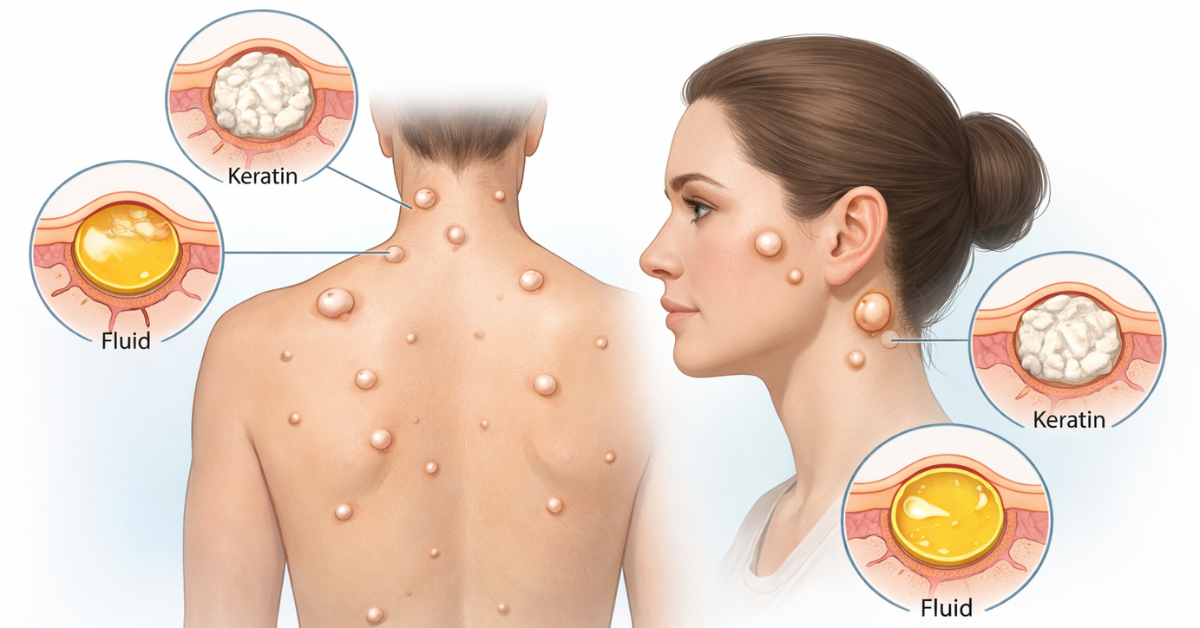
What a Skin Cyst Really Is
You may notice a small bump under your skin and immediately start wondering what it could be. Your first thought might be a pimple, an insect bite, or even something serious.
In many cases, that small lump is something called a skin cyst.
Skin cysts are actually very common, and most people experience at least one during their lifetime. While the word “cyst” might sound alarming, most skin cysts are harmless and manageable.
Understanding what a skin cyst really is can help you stay calm and make better decisions for your skin.
Below is a simple explanation that helps you recognize what is happening beneath your skin.
A Small Pocket Beneath Your Skin
A skin cyst is a small sac or pocket that forms beneath the surface of your skin. This pocket usually fills with fluid, keratin, or semi-solid material.
Keratin is the protein that also makes up your hair, nails, and outer skin layer.
When a cyst forms, it often feels like a soft or firm lump that moves slightly under your fingers. You might notice it while washing your face, applying lotion, or simply touching your skin.
Most cysts grow slowly, and they may stay the same size for months or even years.
The skin over a cyst usually looks normal. Sometimes the area appears slightly raised or rounded. In many cases, the cyst does not cause pain unless it becomes irritated or inflamed.
You might also notice a small dark spot in the center of some cysts. This spot is often called a “punctum,” which marks the blocked pore where the cyst formed.
While cysts can appear anywhere on the body, they are common on the face, neck, scalp, back, and chest. These areas naturally produce more oil and skin cells, which can contribute to cyst formation.
How Skin Cysts Usually Form
Skin cysts often develop when skin cells move deeper into the skin instead of shedding normally. Your skin constantly renews itself by producing new cells and releasing old ones.
Sometimes this process does not work perfectly.
When skin cells become trapped under the surface, they continue producing keratin. This material slowly collects inside a small pocket. Over time, the pocket expands and forms the bump you can feel.
Blocked hair follicles are another common reason cysts appear. When a follicle becomes clogged with oil, dead skin cells, or debris, a cyst may develop. Minor skin injuries can also play a role. You may develop a cyst after irritation, inflammation, or repeated friction on the skin. Sometimes acne can trigger cyst formation as well.
Hormonal changes may also influence cyst growth. Your skin produces different amounts of oil during puberty, adulthood, and certain hormonal shifts. Even though cysts can look unusual, they usually form through simple and harmless skin processes.
Why Skin Cysts Feel Different From Pimples
You might first mistake a cyst for a pimple because both appear as bumps on the skin. However, cysts and pimples behave very differently.
A pimple usually develops quickly and often appears red or inflamed. You may also notice whiteheads, blackheads, or pus with acne blemishes.
A cyst, on the other hand, grows more slowly. It often feels round and smooth under your skin. Unlike a pimple, it usually does not have an obvious head.
Another difference is how the bump moves. A cyst often shifts slightly when you press it gently. A typical acne blemish usually feels more attached to the skin surface.
Cysts also tend to last longer than pimples. While a pimple may heal within days, a cyst can remain for months or even longer.
Understanding this difference helps you avoid treating a cyst like a regular breakout.
Why Most Skin Cysts Are Harmless
The good news is that most skin cysts are completely harmless. They are considered benign, which means they are not cancerous.
Many cysts never cause serious problems.
You may simply notice a small lump that stays the same size over time. Some cysts even disappear on their own without treatment.
However, a cyst can occasionally become irritated or infected. When this happens, you may notice redness, swelling, warmth, or tenderness. The cyst might also grow quickly or start draining fluid.
These changes do not necessarily mean something dangerous is happening. They simply indicate that the cyst has become inflamed.
A dermatologist can evaluate the lump and recommend safe treatment if needed.
When You Should Pay Attention
Even though most cysts are harmless, it is still important to stay aware of changes in your skin. You should monitor any lump that grows rapidly or becomes painful.
If the area becomes red, swollen, or starts draining fluid, it may require medical attention. Trying to squeeze or pop a cyst can make the inflammation worse.
It may also increase the risk of infection or scarring.
Professional evaluation helps ensure the lump is truly a cyst and not another skin condition. Dermatologists can examine the bump, confirm the diagnosis, and recommend the best approach.
In many cases, treatment is simple and straightforward.
A Common and Manageable Skin Condition
Skin cysts may look unusual, but they are a normal part of dermatology care. They develop through natural skin processes that sometimes go slightly off track.
When you understand what a skin cyst really is, you can respond calmly and responsibly. Instead of worrying about every small lump, you can focus on monitoring your skin and seeking guidance when needed.
Most importantly, you should remember that cysts are common, manageable, and usually harmless. With the right care and advice, you can keep your skin healthy and worry-free.
Common Triggers Behind Cyst Formation
You might notice a small lump on your skin and immediately wonder why it appeared. Skin cysts rarely form without a reason, even if the cause is not obvious.
Your skin goes through many changes every day, and certain triggers can lead to cyst formation.
Most cysts develop slowly and quietly beneath the surface of your skin. You may not even notice them until they become large enough to feel with your fingers.
Learning about common triggers helps you understand why these bumps sometimes appear.
While cysts are usually harmless, knowing what causes them can help you care for your skin better.
Blocked Pores and Trapped Skin Cells
One of the most common reasons a cyst forms is a blocked pore. Your skin constantly produces new cells while shedding old ones. This process normally happens without you noticing anything unusual.
Sometimes the shedding process does not work perfectly. Old skin cells can become trapped beneath the surface instead of leaving the body. When this happens, a small pocket begins forming under your skin.
These trapped cells continue producing keratin, which is a natural skin protein. Keratin slowly builds up inside the pocket and creates a small lump. Over time, that lump becomes what you recognize as a cyst.
Blocked pores can happen anywhere on the body, but they are more common in oily areas. You might see cysts appear on your face, neck, scalp, back, or chest. These areas produce more oil, which makes clogged pores more likely.
Your daily habits can sometimes contribute to blocked pores. Heavy skincare products or thick creams may occasionally clog the skin if they are not suitable. Regular cleansing and gentle skincare can help reduce this trigger.
Hair Follicle Problems
Hair follicles are tiny structures in your skin where each hair grows. These follicles also produce oil that keeps your skin soft and protected.
Sometimes a follicle becomes irritated or blocked.
When a hair follicle becomes clogged, it can trap oil and skin cells. This buildup can create a small pocket under the skin. Over time, the pocket expands and forms a cyst.
You might notice this type of cyst on the scalp or areas with thicker hair growth. Some people develop cysts repeatedly in the same spot because the follicle stays blocked.
Ingrown hairs can also contribute to cyst formation. An ingrown hair grows sideways instead of rising through the skin surface. This irritation can trigger inflammation and encourage cyst development.
Good grooming habits and gentle exfoliation may help reduce follicle-related issues.
Skin Injuries and Irritation
Even minor skin injuries can sometimes trigger cyst formation. You may not even remember the small injury that started the process.
A scratch, cut, or irritation can push surface skin cells deeper into the skin. These cells continue producing keratin even after being trapped. Eventually, a cyst may form around the trapped material.
Repeated friction can also play a role. Tight clothing, constant rubbing, or pressure on the skin may irritate hair follicles. Over time, this irritation can contribute to cyst development.
For example, cysts sometimes appear on areas that experience frequent friction. The back, shoulders, and thighs are common places where irritation occurs.
Protecting your skin from repeated rubbing may help reduce this trigger.
Hormonal Changes and Oil Production
Your hormones influence how much oil your skin produces. When oil production increases, pores and follicles are more likely to become clogged.
You may notice more skin changes during certain life stages. Puberty, stress, and hormonal fluctuations can affect how your skin behaves.
During these times, your sebaceous glands may produce extra oil. This oil mixes with dead skin cells and debris on the surface. The mixture can clog pores and create the perfect environment for cyst formation.
Hormonal shifts can also explain why some people develop cysts more often than others. Your skin’s natural balance may simply make you more prone to clogged follicles.
Maintaining a consistent skincare routine may help keep oil levels balanced.
Genetics and Your Skin Type
Sometimes cyst formation runs in families. If your parents or close relatives develop cysts often, you might experience them too.
Your skin type plays a role in how your pores behave. People with naturally oily skin may experience clogged pores more frequently.
Certain inherited conditions can also increase the likelihood of cyst formation. These conditions are uncommon but can cause multiple cysts to appear on the body.
Even when genetics play a role, cysts are usually harmless and manageable. A dermatologist can help monitor recurring cysts and recommend safe treatment options.
Why Understanding Triggers Matters
Learning what triggers cyst formation helps you stay calm when you notice a lump. Most cysts are simply the result of everyday skin processes.
Your skin is constantly renewing itself and responding to your environment. Sometimes these natural processes create small pockets beneath the surface.
When you understand these triggers, you can focus on caring for your skin wisely. Gentle cleansing, balanced skincare, and avoiding irritation may support healthy pores.
Most importantly, you should remember that cysts are common and usually harmless. If you ever feel unsure about a lump, a dermatologist can provide reassurance and guidance.
Knowing the triggers helps you feel informed, confident, and ready to take care of your skin.
When a Lump Should Be Checked
Finding a lump on your skin can feel surprising. You might notice it while washing your face or applying lotion. Your mind may quickly jump to many questions.
Is it a cyst? Is it a pimple? Should you worry?
Most skin lumps are harmless, especially when they grow slowly and cause no discomfort. However, your skin sometimes gives signals that deserve attention. Knowing when to check a lump can help you protect your skin and stay calm.
You do not need to panic over every bump you feel. Instead, you simply need to know what signs deserve a closer look.
When a Lump Changes in Size
One important thing you should watch is how quickly the lump grows. Many harmless cysts stay the same size for a long time. Some grow slowly over months or even years.
If you notice the lump getting larger within a short time, it deserves attention. Rapid growth can sometimes signal irritation or inflammation.
For example, you may notice a small bump that suddenly doubles in size within weeks. That change may simply mean the cyst filled with more keratin or fluid. However, a dermatologist should still examine the lump.
You should also check a lump that continues growing without stopping. Even if the change seems slow, ongoing growth should be evaluated.
Monitoring size is easier than you might think. You can take a photo or gently feel the lump once in a while. Small observations help you recognize when something changes.
Your goal is not to become overly worried about every bump. Instead, you want to stay aware of changes that stand out.
When the Lump Becomes Painful
Most cysts are painless when they first appear. You may feel a small bump under your skin with no discomfort.
Pain can sometimes develop if the cyst becomes irritated. This irritation may happen because of friction, pressure, or inflammation.
For example, a cyst on your back might become sore if it rubs against clothing. A cyst on your scalp may feel tender when brushing your hair.
Pain alone does not always mean something serious. However, it is a good reason to have the lump checked.
You should also pay attention if the area becomes warm or swollen. These symptoms can signal inflammation or infection.
If a cyst becomes infected, it may feel more sensitive or throbbing. The skin around it may also look red.
A dermatologist can quickly evaluate the area and recommend proper treatment.
When the Skin Looks Red or Inflamed
Healthy skin cysts usually look calm and unchanged. The skin above them often appears smooth and normal.
Sometimes the area begins to look red or irritated. You might notice swelling or a change in color around the lump.
Inflammation can happen for several reasons. The cyst may become irritated by pressure, friction, or squeezing.
Trying to pop or press the lump can also trigger inflammation. Many people attempt this because the cyst resembles a pimple.
Unfortunately, squeezing often makes the situation worse. It can push the cyst contents deeper into the skin.
Inflammation may cause the cyst to grow larger or become painful. In some cases, the cyst may start draining fluid.
When redness or swelling appears, it is best to let a dermatologist examine the area.
When the Lump Starts Draining
A cyst sometimes releases fluid or thick material. You might notice a small opening that drains white or yellow contents.
This drainage may happen if the cyst ruptures beneath the skin. The body may also push the material out naturally.
Although drainage may relieve pressure, it should still be evaluated. The cyst capsule may remain under the skin.
If the capsule stays in place, the cyst may refill later. This is one reason cysts sometimes return.
You should also watch for signs of infection during drainage. Foul odor, increased redness, or thick discharge may appear.
Professional care can clean the area and reduce the chance of recurrence.
When the Lump Feels Unusual
Many cysts feel soft or slightly firm under your fingers. They often move a little when you gently press them.
If a lump feels extremely hard or fixed in place, it should be examined. A lump that does not move may need further evaluation.
Texture changes also matter. If the lump suddenly feels different than before, it deserves attention.
You know your own skin better than anyone else. When something feels unusual, your instincts are worth listening to.
Dermatologists evaluate lumps every day, so they can quickly identify common skin conditions.
Why Professional Evaluation Helps
Checking a lump does not mean something serious is happening. Most skin bumps turn out to be harmless cysts or benign growths.
A professional evaluation simply provides clarity and peace of mind. Dermatologists can examine the lump and confirm what it is.
Sometimes the doctor may recommend simple monitoring. Other times, a small procedure may remove the cyst completely.
Early evaluation also prevents unnecessary irritation from squeezing or picking.
Most importantly, checking a lump helps you stay proactive about your skin health.
